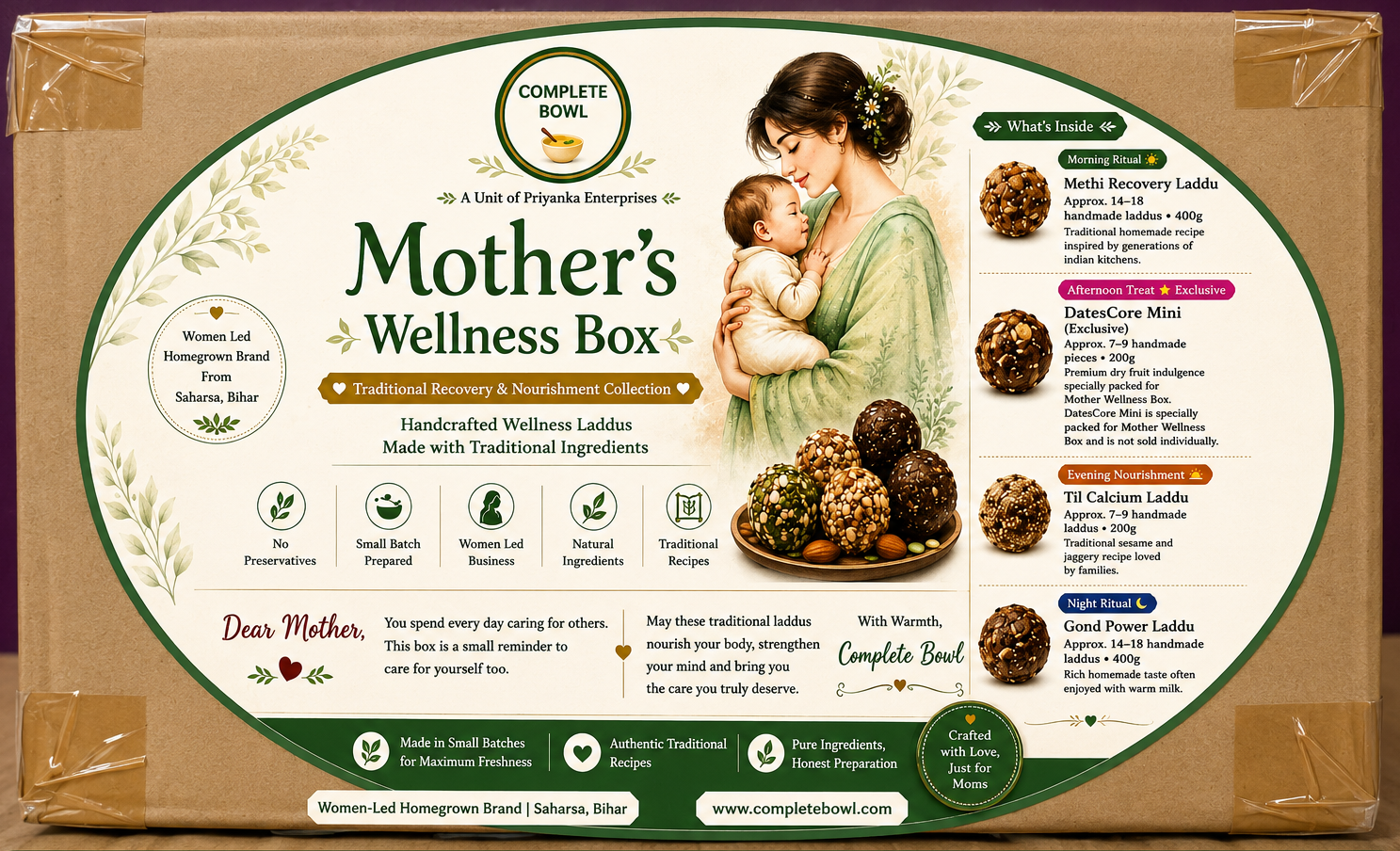
The weeks after delivery are a delicate time for a mother's body. In Indian households, this period is often guided by generations of food wisdom — warm meals, healing grains, and nourishing postpartum laddus prepared with desi ghee, jaggery, and premium ingredients. This guide explains what to eat after delivery, why extra nutrition matters, and how traditional Bihar recipes continue to support modern mothers.
What to Eat After Delivery
A balanced Indian postpartum diet focuses on warmth, digestion, and steady energy. New mothers are often encouraged to eat small, frequent meals rather than three heavy ones. The goal is to rebuild strength, support recovery, and provide nourishment if the mother is breastfeeding.
- Whole grains like bajra, ragi, and wheat for sustained energy
- Pulses and legumes for plant-based protein and fibre
- Desi ghee in moderation for richness and traditional satiety
- Green leafy vegetables for iron and micronutrients
- Nuts, seeds, and dry fruits for healthy fats and crunch
- Jaggery instead of refined sugar for natural sweetness
- Plenty of warm fluids, herbal teas, and water
Why Mothers Need Extra Nutrition
Pregnancy and delivery place significant demands on the body. After birth, a mother needs additional calories, protein, vitamins, and minerals to recover from childbirth, manage sleep disruption, and — if breastfeeding — produce milk. The traditional confinement diet in many Indian families is designed around these exact needs.
Rather than focusing on restriction, the traditional approach emphasizes abundance of the right foods: nutrient-dense, easy to digest, and prepared with love. This is where postpartum laddus become a practical, portable source of nourishment.
The Importance of Iron and Calcium
Two nutrients receive special attention during the postpartum phase: iron and calcium.
Iron
Blood loss during delivery can lower iron stores. Traditional iron-rich foods include ragi, bajra, green leafy vegetables, jaggery, sesame, and dry fruits. These ingredients often appear in postpartum laddus and snacks.
Calcium
Calcium supports bone recovery and breastfeeding needs. Til (sesame), ragi, and dairy-based preparations are traditional calcium sources in Indian postpartum diets.
Benefits of Methi Laddus After Delivery
Methi Sonth Recovery Laddu is one of the most recognised foods in the Indian postpartum pantry. Fenugreek seeds are gently roasted and combined with whole wheat flour, desi ghee, and jaggery to create a warming, energy-rich laddu.
- Traditionally valued as a warming food for new mothers
- Provides energy-dense nourishment between meals
- Made with natural sweetener — no refined sugar
- Easy to store and eat during a busy newborn routine
- A familiar homemade taste rooted in Indian tradition
Benefits of Gond Laddu After Pregnancy
Gond Power Laddu has long been associated with strength and recovery in Indian households. Edible gum is fried in pure desi ghee until it puffs up, then mixed with whole wheat flour, jaggery, coconut, almonds, and cashews.
- Traditionally linked with postpartum strength foods
- Rich in energy and healthy fats from nuts and ghee
- Satisfying homemade taste often enjoyed with warm milk
- Prepared in small batches without preservatives
- A cherished part of North Indian and Bihar postpartum rituals
Traditional Bihar Postpartum Recipes
Bihar has a rich food heritage when it comes to nourishing new mothers. Families often prepare these recipes in small quantities using farm-fresh ingredients and pure ghee.
Gond Laddu
A traditional Bihar favourite made with edible gum, desi ghee, whole wheat flour and jaggery. Often prepared in small batches for new mothers.
Methi Laddu
Roasted fenugreek seeds blended with wheat flour, ghee and jaggery. Valued as a warming, energy-rich snack in many Bihar households.
Til Laddu
Sesame and jaggery laddus prepared during winter and postpartum recovery for their traditional calcium and warmth benefits.
Sattu Drink
Roasted gram flour mixed with water, jaggery and a pinch of black salt — a cooling, protein-rich drink popular across Bihar.
Foods to Avoid After Delivery
While every mother's body is different, traditional Indian advice generally recommends avoiding foods that are very cold, excessively spicy, or difficult to digest during the early postpartum weeks.
- Cold drinks and chilled foods straight from the refrigerator
- Excess caffeine and strong tea
- Deep-fried and heavily processed snacks
- Refined sugar in large quantities
- Foods that personally cause bloating or discomfort
This article shares traditional food wisdom and is not a substitute for medical advice. Please consult your doctor or nutritionist for guidance tailored to your health needs.
Explore the Motherhood Journey
Complete Bowl's Motherhood Journey offers stage-wise Cores — Prenatal Nourish, Early Postpartum Restore and Extended Postpartum Strength — thoughtfully curated from traditional Indian nourishment practices.
Explore the Motherhood JourneyFAQ